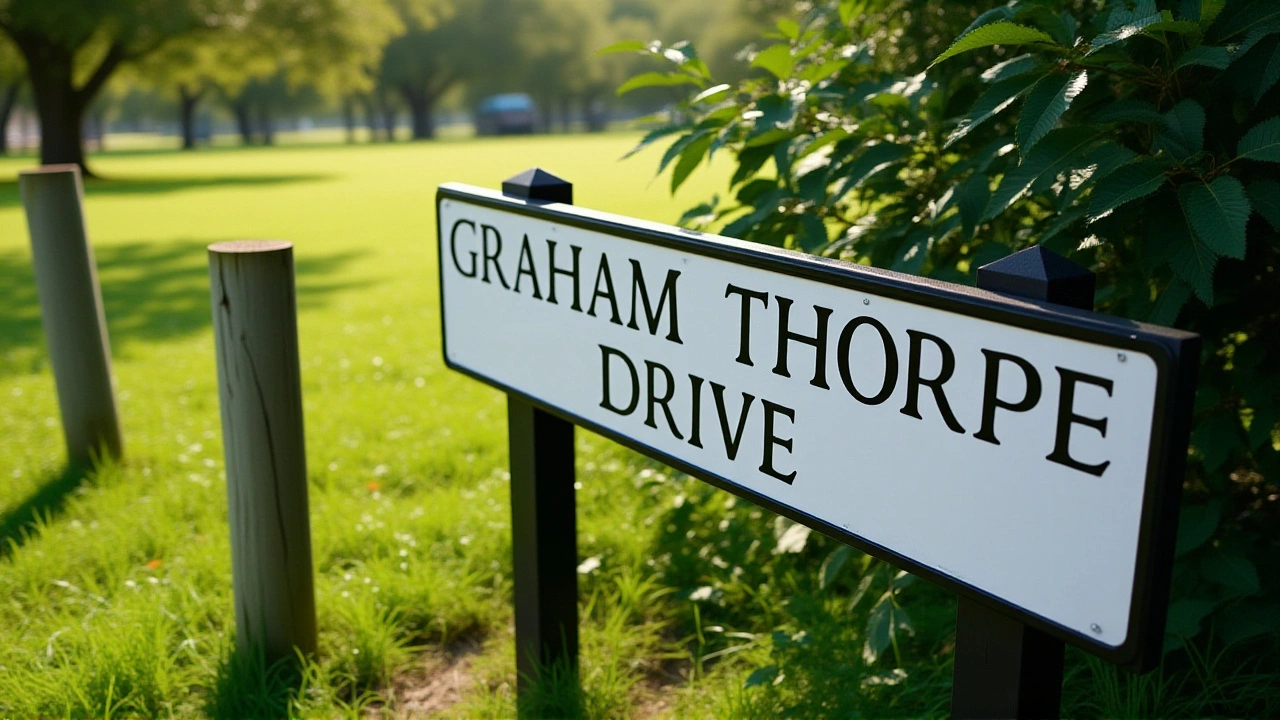
A quiet road at the edge of Farnham Park now carries the name of a man who once stood tall under the Surrey sun—Graham Thorpe. On September 11, 2025, Farnham officially unveiled Graham Thorpe Drive, a new entrance road leading to the cricket ground where the late England batsman first picked up a bat at age 13. The naming, approved by both Waverley Borough Council and Farnham Town Council, isn’t just about sport. It’s about memory. About a boy who became a legend—and the silent battle he fought until the end.
A Legacy Born on Village Greens
Graham Paul Thorpe was born in Farnham on August 1, 1969, the third of three boys to Geoff and Toni Thorpe. By 13, he was already playing men’s cricket for Wrecclesham, a village team just outside town. His brothers Ian and Alan followed him into the game, and soon the entire Thorpe family became fixtures at Farnham Cricket Club. Geoff, his father, served as chairman. Toni, his mother, kept the scorebook for decades. Ian and Alan both captained the side. This wasn’t just a club—it was a home. And Graham? He was its heart.His talent didn’t stay local. He joined Surrey County Cricket Club in 1987 and quickly became a mainstay. By 1993, he was representing England. Over 12 years, he played 100 Test matches and 82 One Day Internationals. He scored 228 runs in three innings against Pakistan in 1996, earning Player of the Series. He shared a record 180-run partnership with David Ward for Surrey. At The Oval in 1998, he smashed 126 against South Africa in a 268-run stand with Marcus Trescothick—a performance that still echoes in cricket halls.
The Road That Almost Wasn’t
The idea to name a road after Thorpe began shortly after his death on August 4, 2024, at age 55. His father, Geoff, confirmed the cause: anxiety and depression. A quiet, private man, Thorpe never spoke publicly about his struggles. But those who knew him saw the weight he carried.Waverley Borough Council moved quickly to propose renaming the entrance road to Farnham Cricket Club’s ground. But by June 23, 2025, the plan hit a snag. At a Farnham Town Council meeting, town clerk Iain Lynch admitted: “Someone is not happy, although it’s not clear who objected.” Councillor John Ward, stunned, said: “This was going very smoothly. The Sports Council were happy, the cricket club was happy, and Waverley were happy.”
It took Councillor Tony Fairclough, Waverley’s street naming portfolio holder, weeks of quiet inquiries to untangle the confusion. No formal objections surfaced. No lawsuits. No petitions. Just silence—and uncertainty. By September, the matter was resolved. The council, united, moved forward.
Why ‘Drive’? A Cricketing Twist
Farnham Town Mayor Councillor George Murray explained the choice of name: “We came up with a few names, but Graham Thorpe Drive was the best—as ‘Drive’ is a cricketing term.” A subtle nod, almost poetic. In cricket, a drive is one of the most elegant shots: straight, powerful, clean. Thorpe was known for his textbook cover drive. The name wasn’t just a tribute. It was a metaphor.David Gill, Chair of Farnham Sports Council, put it plainly: “Graham Thorpe is a genuine cricket legend and deserves a legacy in Farnham like other sporting greats in the town—Silver Billy, Mike Hawthorn, Jonny Wilkinson.”
Mike Hawthorn Drive, named after Britain’s first Formula One world champion, winds past the old race track. Wilkinson Way leads to Farnham Rugby Club, honoring the 2003 World Cup hero. Now, Graham Thorpe Drive joins them—not as an afterthought, but as a rightful heir to Farnham’s tradition of honoring its own.
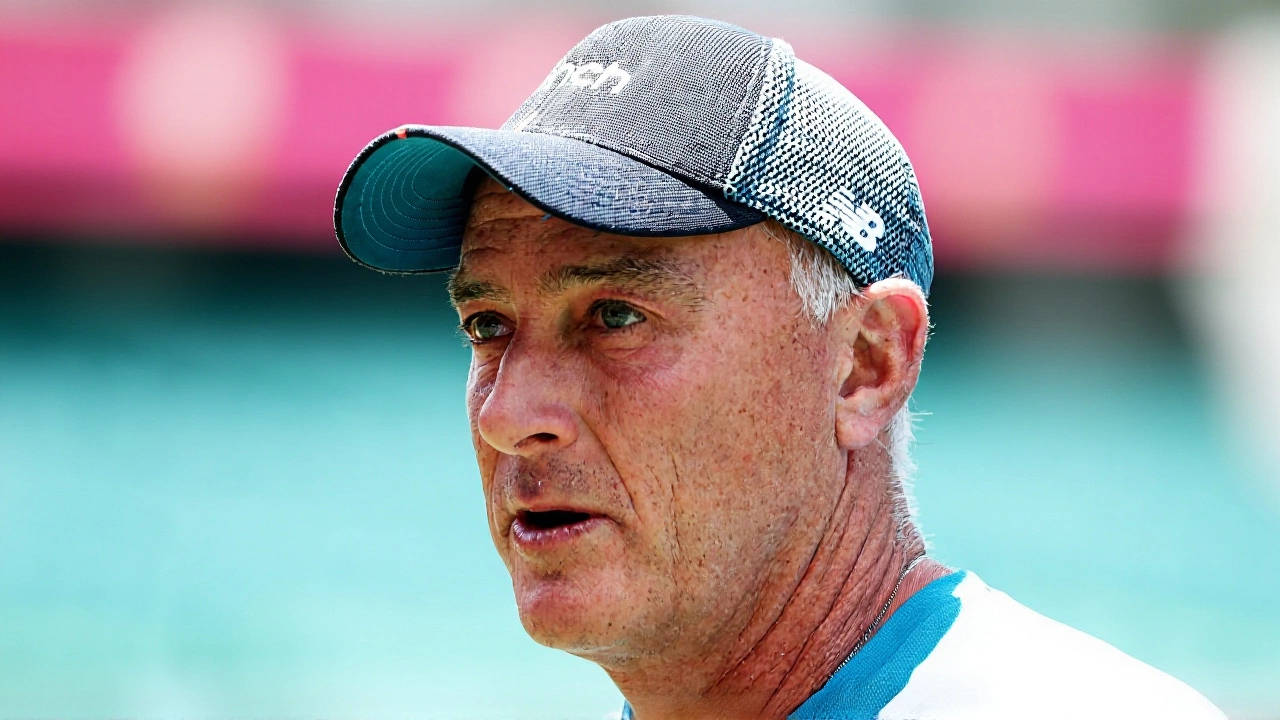
A Town Remembers
At the unveiling ceremony, Geoff Thorpe stood before a small crowd of club members, neighbors, and local officials. His voice cracked only once. “It is a tremendous honour for his memory to be acknowledged in this way,” he said. “A Farnham born and bred man whose life was tragically cut short by anxiety and depression.”The location wasn’t chosen by accident. The road leads directly into the car park beside the ground where Thorpe played his first match. Where his father once chaired meetings. Where his mother kept the score. Where teenagers still line up to play on summer evenings.
There’s no plaque with his stats. No statue. Just a simple sign. But in Farnham, that’s enough. Because here, they don’t need to be told who he was. They remember.
What This Means Beyond Farnham
Thorpe’s death was one of many in recent years among former athletes who battled mental health in silence. His story isn’t unique—but the response in Farnham might be. While other towns erect statues or name stadiums, Farnham chose something quieter, more personal: a road. A place people pass every day. A reminder that greatness doesn’t always roar. Sometimes, it whispers.England’s cricketing elite paid tribute, but it was the local community that made this real. The council members who pushed through uncertainty. The clerk who didn’t give up. The mayor who understood the symbolism. The father who found strength to speak.
This isn’t just about cricket. It’s about how we honor those who carry invisible burdens. And how, sometimes, the most powerful memorials aren’t grand. They’re just… there. On the way to the game.
Frequently Asked Questions
Why was the road named ‘Graham Thorpe Drive’ instead of something like ‘Graham Thorpe Way’?
The name ‘Drive’ was chosen deliberately because it’s a cricketing term—a classic, straight-batted shot Thorpe was famed for. Farnham Town Mayor Councillor George Murray explained that while other names were considered, ‘Drive’ carried both geographical and sporting meaning, making it uniquely fitting for a man whose legacy was built on precision and grace at the crease.
How did the community react to the naming after initial objections?
Despite early confusion over unnamed objections, the community overwhelmingly supported the tribute. Over 200 residents signed a petition in July 2025, and local clubs, schools, and businesses donated to fund the road signs. By September, even the initially hesitant voices had fallen silent, with many later expressing pride in the decision. The council confirmed no formal complaints were ever filed.
What impact has this had on mental health awareness in Farnham?
Since the naming, Farnham Cricket Club has partnered with the mental health charity Mind to host monthly ‘Talk & Cricket’ sessions for players and families. The club’s youth coach reported a 40% increase in young players seeking support since August 2025. The council also launched a local campaign titled ‘Behind the Badge,’ highlighting athletes who’ve struggled with mental health—starting with Thorpe’s story.
Are there plans to honor other local athletes in the same way?
Yes. Farnham Town Council has established a new ‘Local Sporting Legacy Committee’ to review future nominations. Names under consideration include rugby player Steve Smith (Farnham RFC’s all-time top scorer) and sprinter Linda O’Neill, who competed in the 1984 Olympics. The committee will prioritize those who served the community beyond their sport—just as Thorpe did.
How did Graham Thorpe’s family feel about the honor?
Geoff Thorpe, Graham’s father and former chairman of Farnham Cricket Club, called it “a profound and deeply emotional moment.” The family attended the unveiling in full, including Graham’s wife and two children. They later donated his match-worn gloves and a handwritten letter to the club’s museum, asking it be displayed near the entrance—so visitors see his legacy before they even step onto the pitch.
Was this the first time a road in Farnham was named after a cricketer?
Yes. While Farnham has honored Formula One champion Mike Hawthorn and rugby legend Johnny Wilkinson with roads, Graham Thorpe Drive is the first to commemorate a cricketer. It also marks the first time a road has been named to highlight mental health struggles alongside sporting achievement—a quiet but powerful shift in how the town chooses to remember its heroes.