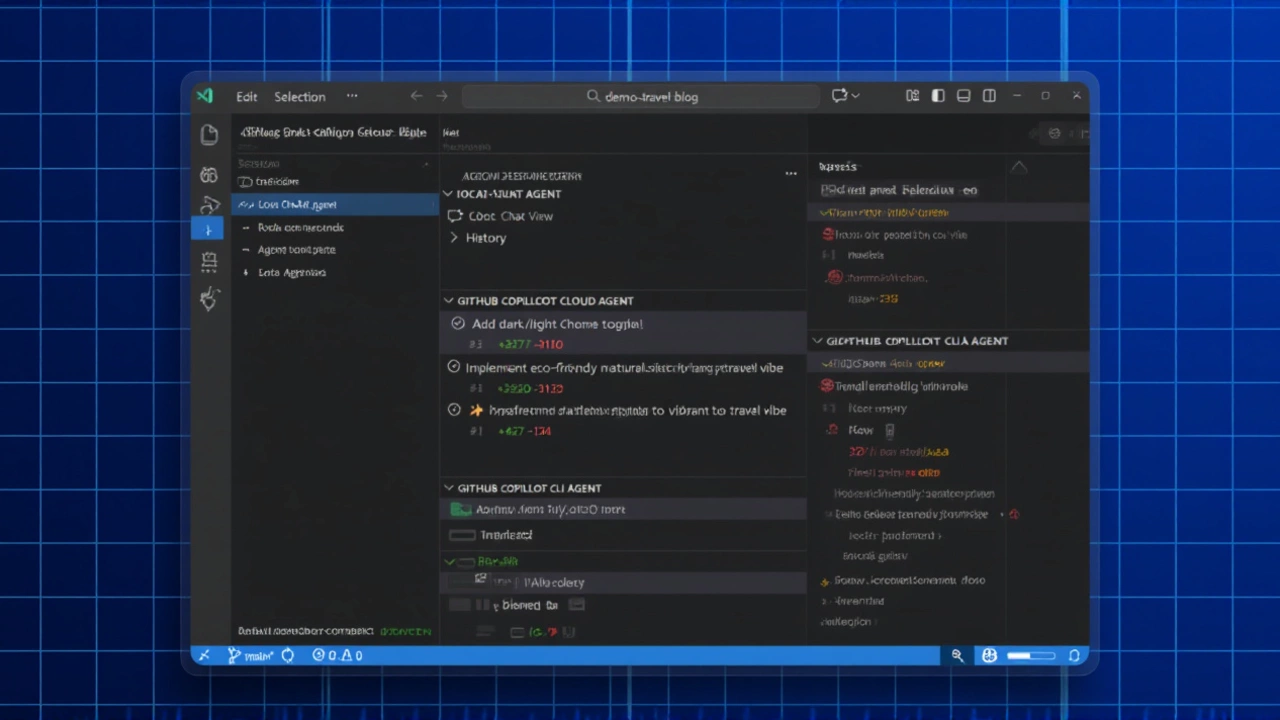
On November 13, 2025, GitHub dropped a quiet revolution in developer tooling: a centralized Copilot mission control built right into Visual Studio Code. No more switching tabs, no more guessing what the AI is doing—now, every GitHub Copilot coding agent task unfolds in a live, sortable panel inside your IDE. It’s not just an upgrade. It’s the moment coding assistants stopped being helpful suggestions and became true co-developers.
From Suggestions to Autonomy
Remember when GitHub Copilot was just a smart autocomplete? It’d suggest a function, you’d accept or reject it, and that was it. Now, it’s a full-fledged agent that can open pull requests, fix bugs, write tests, and update docs—all while you grab coffee. Back in July 2025, Burke Holland, a Microsoft developer advocate, laid the groundwork in a Visual Studio Code blog post: developers could assign GitHub issues to @copilot and let the agent work in isolation. No risk to your local code. No chaos. Just clean, background execution.
The agent doesn’t guess. It plans. Using tools like plan, adapt_plan, and record_observation, it maps out steps, runs tests, and tracks progress like a junior dev with a checklist. When it’s done? It opens a pull request—with a detailed breakdown of every change, why it was made, and what tests passed. You don’t just get code. You get context.
The New Mission Control Panel
The November 13 update is the missing piece: visibility. The new Agent sessions panel in Visual Studio Code shows all active and past agent tasks in one place. You can see which task is running, which is queued, and which hit a snag. Click on one, and you’ll get real-time logs: "Analyzing src/auth.js... Running npm test... Generating unit tests for login flow..."
It’s like having a cockpit view. You’re not just watching a black box—you’re tracking the agent’s reasoning. And if something looks off? You can pause it, tweak the prompt, or even jump in and edit a file mid-task. The agent doesn’t fight you. It waits.
But here’s the catch: you need the latest Visual Studio Code, plus both the GitHub Copilot Chat and GitHub Pull Requests extensions. And you must have write access to the repo. No exceptions. GitHub’s documentation is clear: the agent operates in a temporary GitHub Actions environment, so your local machine stays untouched. That’s not just safe—it’s genius.
How It Works in Practice
Imagine this: You’re assigned a ticket: "Refactor user profile component to use new design system and add accessibility labels." Instead of diving into the code yourself, you drag the issue into the VS Code sidebar, click "Assign to Copilot," and hit enter.
Five minutes later, your Agent sessions panel shows: "Analysis complete. Starting implementation. 3 files modified. 12 tests updated." By lunch, a pull request pops up with a clear checklist:
- Updated component structure
- Added aria-labels for screen readers
- Replaced deprecated CSS classes
- Added unit tests for new props
- Updated documentation in README.md
You review it. Spot a missing label. Leave a comment: "Add aria-labelledby to the avatar container." The agent sees it, updates the PR, and notifies you—all without you touching a line of code.
This isn’t sci-fi. GitHub’s own VS Code team has been using it for months. Dozens of PRs in the official repo were opened by Copilot agents. That’s not a demo. That’s production.
Why This Changes Everything
Before, developers wasted hours context-switching: checking GitHub, then VS Code, then Slack, then CI logs. Now, everything’s in one place. You’re not managing tools—you’re managing outcomes.
Teams are already reporting 30–40% faster task completion for routine work like documentation updates and test coverage fixes. Technical debt? It’s no longer a backlog item. It’s a delegated task. And for junior devs? This is like having a senior engineer pair-programming 24/7.
But here’s the real shift: the burden of execution is moving. Developers aren’t just writing code anymore. They’re directing it. The role is evolving from coder to conductor.
What’s Next?
GitHub says it’s listening. The feature is rolling out to all Copilot users with access to the coding agent, and feedback is being collected in the GitHub Community forum. Expect AI-generated commit messages soon. Maybe even agent-to-agent collaboration. Or automated code reviews between agents.
One thing’s certain: the era of typing every semicolon is over. The future belongs to those who know how to ask the right questions—and when to step in.
Frequently Asked Questions
Do I need a paid GitHub Copilot plan to use the mission control feature?
Yes. The centralized Agent sessions panel requires access to the GitHub Copilot Coding Agent, which is only available with a paid Copilot Business or Enterprise subscription. Free Copilot users can still get inline suggestions but won’t see the task panel or be able to assign issues to the agent.
Can the Copilot agent work on private repositories?
Absolutely. The agent operates in a secure, isolated GitHub Actions environment and only has access to repositories where you’ve granted it write permissions. All code remains within your organization’s infrastructure, and GitHub confirms no private code is used for training.
What happens if the agent makes a mistake?
The agent never pushes directly to main. Every change goes through a pull request, where you review, comment, or request changes. You can reject the entire PR, ask for revisions, or even override specific edits. Human oversight remains the final gatekeeper.
How does this compare to other AI coding tools like Amazon CodeWhisperer or Google Gemini Code Assist?
Unlike competitors that focus on single-line suggestions, GitHub Copilot’s agent system is the first to offer end-to-end task automation with built-in workflow tracking. Amazon and Google lack the deep GitHub integration—no native PR creation, no session logs inside the IDE. This isn’t just better AI. It’s better workflow design.
Can multiple agents work on the same repo at once?
Yes. The system supports concurrent agent tasks, each running in its own isolated environment. The mission control panel clearly labels which task belongs to which issue or chat prompt. Conflicts are rare because agents only touch files tied to their assigned task, and pull requests prevent overlapping merges.
Is there a limit to how many tasks I can assign?
GitHub hasn’t published a hard cap, but performance degrades if you assign more than 5–7 concurrent tasks. The system queues extras and starts them as slots free up. For teams, GitHub recommends assigning tasks strategically—prioritize documentation, tests, and refactorings over complex feature work.